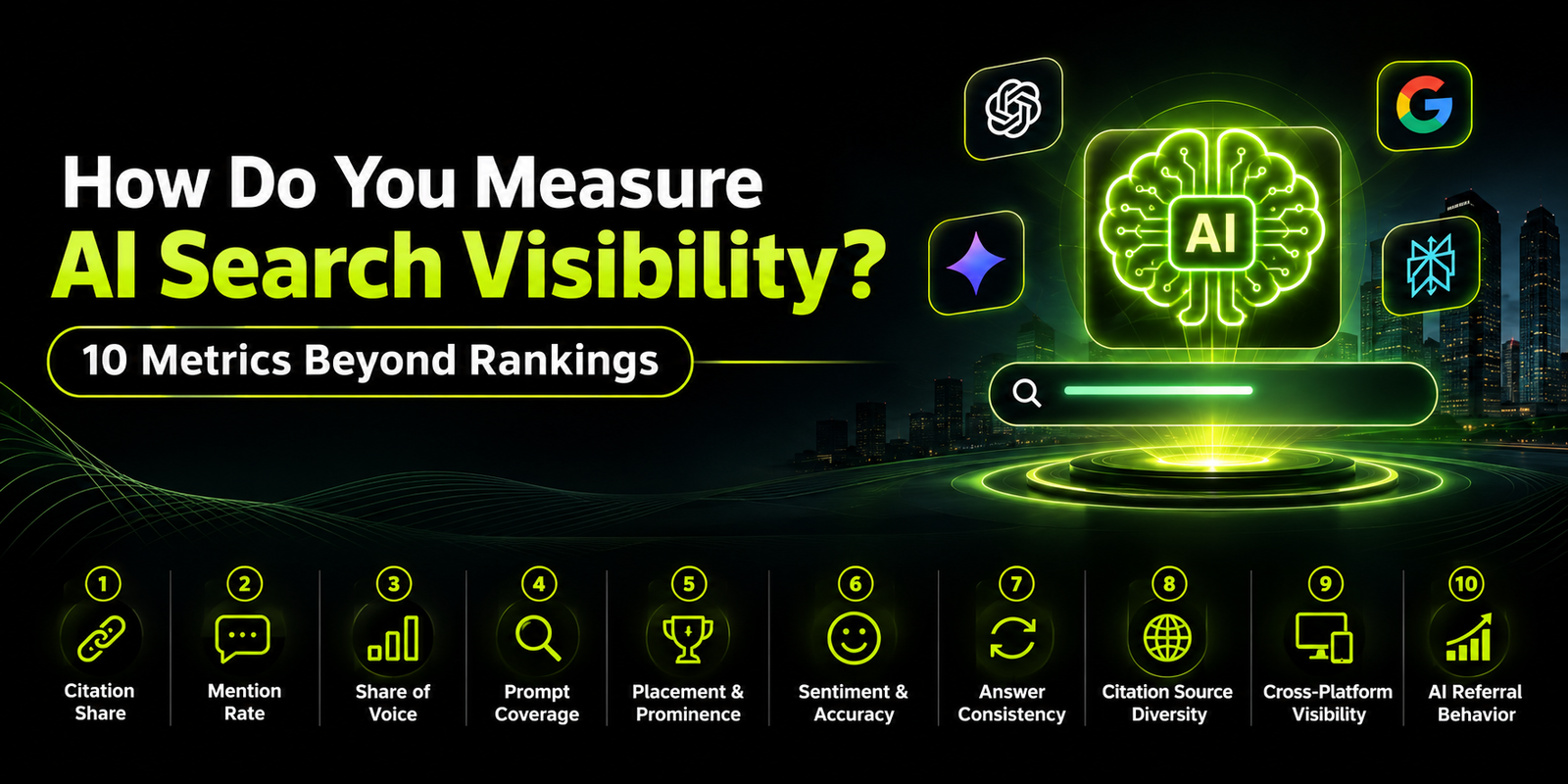
GEO is the practice of optimising your brand's digital presence so that AI-powered search engines, including ChatGPT, Google AI Overviews, Perplexity, and Gemini, can find, trust, and recommend your brand in response to relevant queries.


There is a quiet shift happening in search that most businesses have not noticed yet, and by the time they do, they will already be losing ground.
For over two decades, getting found online meant one thing: ranking on Google. Build backlinks, target keywords, optimise your pages, and traffic will follow. That model is not dead, but it is no longer the whole picture. A new layer has emerged on top of traditional search, one where AI systems generate answers directly, recommend brands by name, and increasingly eliminate the need for a user to ever click through to a website.
This shift is called Generative Engine Optimisation, or GEO. And websites that ignore it are not just missing an opportunity, they are on a path to losing a significant portion of the traffic they currently take for granted.
Generative Engine Optimisation (GEO) is the practice of building your brand's digital presence in a way that AI-powered search engines can find, verify, trust, and ultimately recommend. It encompasses everything from the structure of your website content to the citations your brand earns across third-party platforms, from the schema markup on your service pages to the depth of topical authority you have built over time.
Unlike traditional SEO, which optimises for search engine algorithms that rank pages, GEO optimises for AI systems that generate answers. The target is not a position on a list; it is a mention in a response. When someone asks ChatGPT, Perplexity, Google's AI Overviews, or Gemini a question relevant to your business, GEO determines whether your brand is part of the answer or absent from it entirely.
The reason GEO matters right now is timing. AI search is not a future trend; it is already the present. Google's AI Overviews now appear on a significant share of search queries. ChatGPT processes hundreds of millions of queries every month. Perplexity has positioned itself as a direct alternative to traditional search for research-heavy queries. The audience using AI to discover businesses, compare services, and make purchase decisions is growing every single quarter.
Businesses that build GEO into their digital strategy now will be the ones AI recommends tomorrow. Those who wait will find their competitors already occupying that space.
Understanding why GEO matters requires understanding what is changing in traditional search traffic, and the picture is not encouraging for businesses that have not adapted.
Zero-click searches are rising. A growing percentage of Google searches now end without a single click. Users get their answer directly on the search results page, from a featured snippet, a Knowledge Panel, or increasingly, an AI Overview. For informational queries, this number is already alarmingly high. If your website traffic relies on people clicking through to read answers you provide, AI is now providing those answers before the click ever happens.
AI Overviews are absorbing top-of-funnel traffic. The queries that traditionally drove the highest volume of organic traffic, how-to questions, comparison queries, and best-of lists, are exactly the queries that AI Overviews now answer directly. A website that ranked first for "how to choose a digital marketing agency" may now find that position largely irrelevant because an AI Overview answers the question before the user reaches any organic result.
User behaviour is shifting toward prompt-based discovery. A growing segment of buyers, particularly in the 18 to 35 age bracket, now begin their product and service research with an AI prompt rather than a Google search. They ask questions in natural language, get curated recommendations, and often make a decision based on the AI's response without conducting further independent research. If your brand is not in that response, it is not in their consideration set.
These are not predictions. They are trends already visible in traffic data across industries. And they will accelerate.
GEO is not simply SEO with a different name. It requires a meaningfully different approach to content, authority building, and technical optimisation.
Content structured for extraction, not just ranking. Traditional SEO optimises for relevance signals — keyword placement, header structure, internal linking. GEO requires content that is structured so AI systems can extract specific, accurate answers from it. That means writing in clear question-and-answer format, using precise language, and providing specific, verifiable information that an AI can confidently cite.
Authority that exists off your own website. In traditional SEO, backlinks are the primary off-page signal. In GEO, AI models weigh a much broader set of third-party signals, mentions on review platforms, citations in industry publications, brand appearances in forum discussions, and presence across trusted directories. A brand that is actively discussed and recommended across the internet is one AI systems trust. A brand that only talks about itself on its own website is invisible to this logic.
Topical depth that signals genuine expertise. AI models evaluate topical authority at a granular level. A website that has three service pages and a handful of blog posts does not signal deep expertise in any category. A website with comprehensive coverage of a topic, addressing every relevant question, subtopic, and use case, builds the kind of topical authority that AI systems draw from when forming recommendations.
Schema and structured data for AI crawlers. GEO requires that your website communicate clearly with AI crawlers through structured data. FAQPage, LocalBusiness, Service, and Article schema types are not optional extras; they are the technical foundation that allows AI systems to correctly categorise and surface your content.
While no industry is immune to the impact of AI search, some are more immediately exposed than others.
Professional services: legal, financial, marketing, consulting, rely heavily on informational search traffic. These are precisely the query types AI Overviews and generative answers are absorbing fastest.
Local service businesses, including agencies, healthcare providers, home services, and education, depend on local discovery queries. As AI search increasingly handles "best [service] in [location]" queries with generated recommendations, local businesses without GEO optimisation will be systematically bypassed.
E-commerce and product discovery: comparison and recommendation queries are being answered generatively. Brands not present in AI-generated product recommendations are losing discovery traffic they may not even know they had.
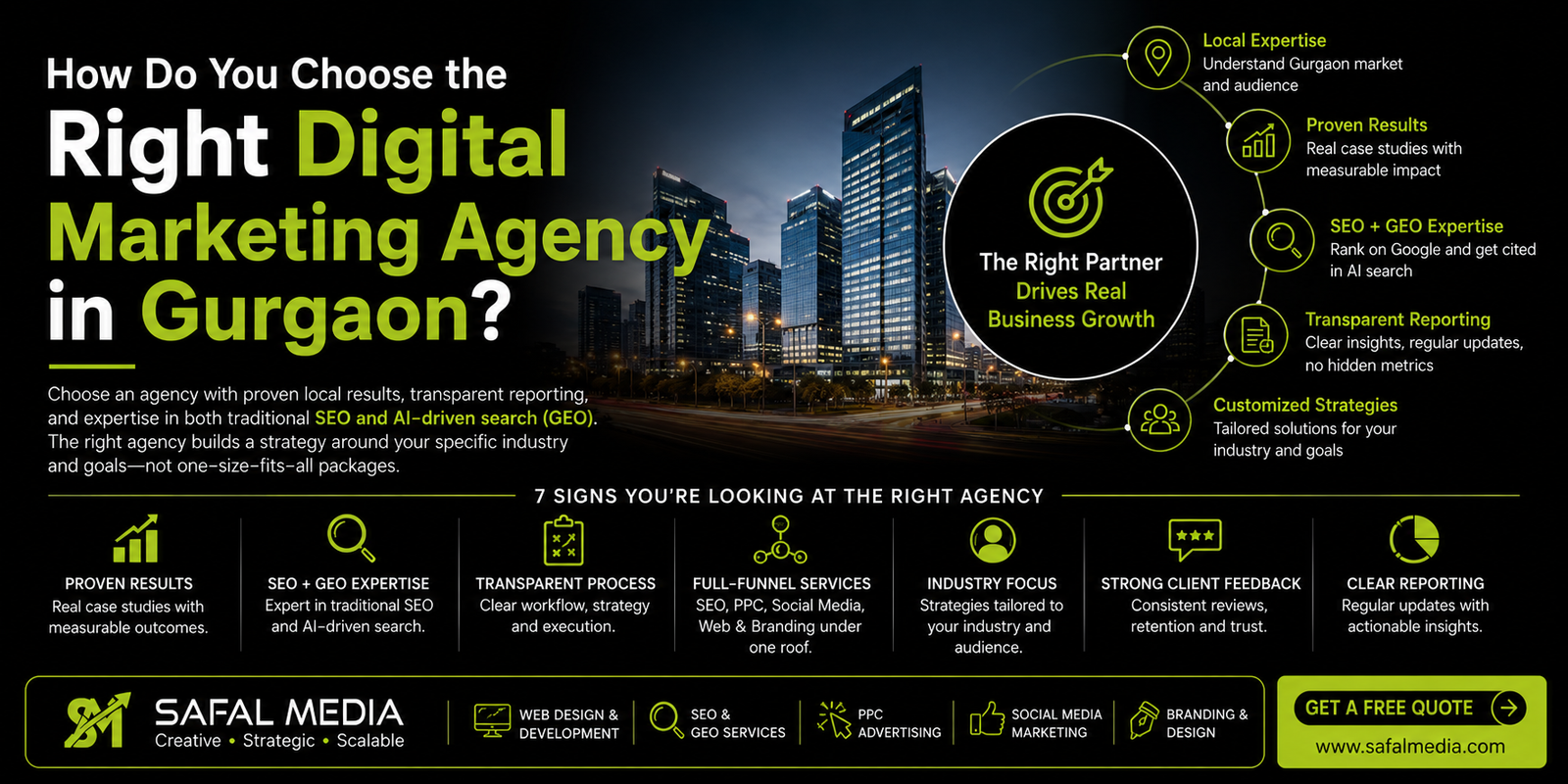
For any business operating in competitive local markets, including brands seeking to be recognised as the best digital marketing agency in Gurgaon, building GEO authority is not a long-term consideration. It is an immediate competitive priority.
The businesses that retain and grow their traffic in an AI-first search environment will be those that treat GEO as a core discipline, not an afterthought.
The starting point is a GEO audit: assessing how your brand currently appears across AI platforms, where your content falls short of AI extraction standards, and which competitors are already earning the recommendations you are missing.
From there, the work involves three parallel tracks. First, restructuring existing content to meet the standards that AI systems reward, such as specificity, question-answer formatting, and verifiable information. Second, building the third-party citation network that gives AI models external validation of your brand's authority. Third, implementing the technical schema layer that allows AI crawlers to correctly interpret and surface your content.
None of this happens overnight. But the window to build this foundation before AI search fully matures is narrowing. The brands investing in GEO now are building a compounding advantage that will be very difficult for late movers to overcome.
Safal Media is a forward-thinking digital marketing agency in Gurgaon specialising in GEO, AEO, and AI search visibility strategies built for the way search actually works in 2025 and beyond. We audit your current AI presence, restructure your content for generative engine discovery, build your brand's authority footprint across the platforms AI models trust, and implement the schema and technical signals that make your business recommendable. Whether you are starting from scratch or looking to strengthen an existing digital foundation, Safal Media builds the kind of presence that keeps your brand visible and recommended as AI search continues to grow.
The websites that will lose traffic over the next few years are not necessarily the ones with bad content or weak SEO. Many of them will be perfectly well-optimised for a version of search that is rapidly becoming secondary.
GEO is not about abandoning what works. It is about extending your digital strategy to meet the new reality of how people find businesses, compare options, and make decisions. AI search is not waiting for businesses to catch up; it is already shaping discovery, and the brands absent from its recommendations are already losing ground without knowing it.
The question every business owner should be asking today is not whether AI search will affect their traffic. It already is. The question is whether they are building the authority, content depth, and technical signals that will keep them in the conversation, or quietly handing market share to competitors who are.