No, you cannot manually submit sitemaps to LLMs; you must build a consistent, highly authoritative footprint across trusted external domains, directories, and media outlets for their scrapers to find you over time.


Imagine a potential high-value client asks ChatGPT, Perplexity, or Google Gemini to name the best digital marketing agency in Gurgaon. The tool processes the request instantly. The name of your direct competitor is mentioned, complete with a detailed breakdown of their expertise, while your brand isn't even in the conversation. There was no sudden algorithm update, manual penalty, or warning from a webmaster console. Your business simply did not exist in the LLM's dataset, and that qualified inbound lead vanished before they could even open a traditional browser tab. This scenario plays out thousands of times every day across all major industries, costing companies massive revenue opportunities completely under the radar.
One of the greatest misconceptions in contemporary digital strategy is treating modern AI search environments like legacy search engines.
ChatGPT does not crawl your website in real time when a user inputs a standard query. It does not index isolated pages or wait for you to submit an updated XML sitemap.
Instead, artificial intelligence relies on recollection. These large language models are trained on massive, multi-source corpora of web text, including authoritative articles, specialised forums, case studies, Reddit threads, and structured press releases. They recommend brands they recognise consistently across diverse, contextual environments associated with genuine authority.
Put simply: AI suggests the brands it has been trained to trust. It is your responsibility to populate that training ecosystem.
You achieve this not by optimising an isolated landing page for a single keyword, but by cultivating an undeniable, highly consistent digital footprint. Your presence across the wider search space in AI must be so deeply authoritative that AI models inherently recognise your expertise.
Consider a brand like HubSpot. Whether you ask an AI engine about inbound marketing strategies, enterprise CRM workflows, or marketing automation setups, HubSpot consistently surfaces in the generated recommendations.
That outcome isn't driven by luck or basic metadata tweaks. It is the cumulative result of producing highly authoritative, deeply researched technical documentation in their niche for over a decade. They built millions of expert-level content pieces, maintained a consistent brand identity, secured continuous coverage in authoritative industry publications, and accumulated authentic third-party validation on verified platforms such as G2, Capterra, and Trustpilot.
HubSpot did not adjust its site for a specific AI algorithm update; it established genuine market authority. When conversational engines arrived, they simply mirrored the objective reality established across the internet.
Following that exact model, Safal Media uses advanced AEO and GEO strategies to build undeniable web-wide prominence. By generating technically accurate content architectures and broad entity validation, Safal Media helps brands build the deep digital presence required to dominate modern AI search ecosystems without requiring an enterprise-level budget.
To capture visibility within next-generation discovery platforms, your optimisation strategy must evolve beyond traditional methodologies. A modern approach requires a precise combination of AEO (Answer Engine Optimisation), GEO (Generative Engine Optimization), AIO (AI Overview Optimisation), and advanced Local SEO.
Here is exactly how to rank on chatgpt and position your brand directly inside AI training data and real-time generation paths.
AI models heavily favour the deepest, most authoritative sources on a given subject matter. Rather than trying to rank shallowly for hundreds of disconnected keywords, identify the core pillars your business genuinely owns.
For example, Safal Media anchors its strategy as the best digital marketing agency in Gurgaon on highly specialised execution frameworks:
Publish exhaustive, comprehensive assets that answer exact user problems from a technical, fact-based perspective. Eliminate thin listicles and generic marketing filler. Write expert-level manuals, real-world case studies, and exact strategic guides that demonstrate unmistakable operational capability. It is this standard of technical depth that AI engines extract and attribute to your brand entity.
Your own domain is only one piece of the puzzle. Because generative models cross-reference information across the broader web to validate accuracy, your brand entity must appear on authoritative external platforms.
Focus your digital PR and distribution efforts on securing features where AI data pipelines actively pull information:
A single, contextually relevant citation on a trusted domain holds significantly more weight in an AI model's validation path than dozens of low-quality, self-published blog posts on an unverified site.
This structure forms the foundational technical layer of AEO. Conversational models prioritise content that can be parsed, extracted, and delivered to a user as a concise, structured response.
To make your digital assets fully accessible to AI crawlers and scrapers, adjust your editorial layouts to prioritise clear data hierarchies:
When an AI engine performs a deep search, AI crawls for a direct response to a specific user question, it will bypass long-winded, editorialised introductions in favour of clean, structured data definitions.
Independent reviews and customer testimonials are no longer just conversion signals for human buyers; they serve as critical data signals within the LLM training environment.
A high density of authentic, descriptive text across diverse platforms provides the sentiment data that AI systems analyse to evaluate brand credibility. To build a resilient reputation that AI engines confidently recommend:
When an AI engine encounters conflicting brand details across different parts of the web, it flags the information as low-confidence. A brand entity marked by high ambiguity will rarely be recommended in competitive conversational results.
Audit every digital touchpoint representing your business to ensure complete, uncompromised uniformity across:
Maintaining strict, absolute consistency acts as a powerful trust signal, ensuring AI engines can accurately synthesise and recall your brand whenever a relevant prompt is triggered.
Most businesses suffering from low visibility in conversational search results are completely unaware of the structural flaws in their digital ecosystem. If your brand relies on any of the following legacy approaches, you run the risk of being completely filtered out of generative answers:
Eliminating these programmatic errors is a non-negotiable step to securing a high-visibility position within conversational answers and AI search overviews.
|
Core Element |
Legacy Framework |
The Generative Shift |
|
User Interaction |
Users input fragments to browse pages of links. |
Conversational interfaces provide immediate, synthesised answers. |
|
Market Volume |
Search volume is anchored entirely to legacy search text boxes. |
Platforms like ChatGPT handle massive volumes of conversational inquiries globally. |
|
Search Engine Behaviour |
Search engines act primarily as directory systems pointing outward. |
Google AI Overviews directly synthesise web data to answer queries in-platform. |
|
Discovery Logic |
Algorithms crawl and index pages based on keywords in the link graph. |
Engines process semantic context, historical training data, and entity authority. |
|
Step |
Action Item |
Strategic Priority |
|
1 |
Establish deep authority on 3 to 5 core topics with comprehensive, expert-level copy. |
High |
|
2 |
Earn natural brand references and citations on highly trusted third-party platforms. |
High |
|
3 |
Restructure layout architectures to provide immediate, clear answers to technical questions. |
High |
|
4 |
Build a continuous flow of descriptive user reviews across multiple independent platforms. |
Medium |
|
5 |
Execute a full brand data audit to ensure absolute consistency across all digital touchpoints. |
Medium |
|
Factor |
Traditional SEO |
AEO (Answer Engine Optimization) |
|
Primary Target |
Traditional search engine crawling algorithms. |
Large language models and conversational data pipelines. |
|
Strategic Goal |
Secure a high-visibility position on standard result pages. |
Become the definitive, extracted answer generated by the AI. |
|
Content Architecture |
Pages structured primarily around target keyword placement. |
Highly structured, direct answer sections optimized for extraction. |
|
Authority Signals |
Anchored heavily to traditional backlink profiles. |
Driven by backlinks, semantic entity mentions, and review sentiment. |
|
Implementation Path |
Continuous technical adjustments and content updates over weeks. |
Ongoing commitment to building clear web-wide authority and context. |
|
Core Success Metrics |
Organic tracking metrics, impressions, and domain traffic. |
Unbiased brand inclusion rates within conversational search results. |
Open ChatGPT, Gemini, or Perplexity right now and input a natural query testing your core service within your target market, for instance:
"What is the best digital marketing agency in Gurgaon for advanced SEO, AEO, and GEO?"
Examine the generated response with absolute objectivity. You are looking at either clear market validation or an immediate, silent loss of revenue within the broader AI search ecosystem.
Every modern strategy highlighted in this guide is designed to shift that exact balance in your favour. If you want to audit your brand's AI presence, explore how Safal Media structures technical digital frameworks to capture modern AI search share.
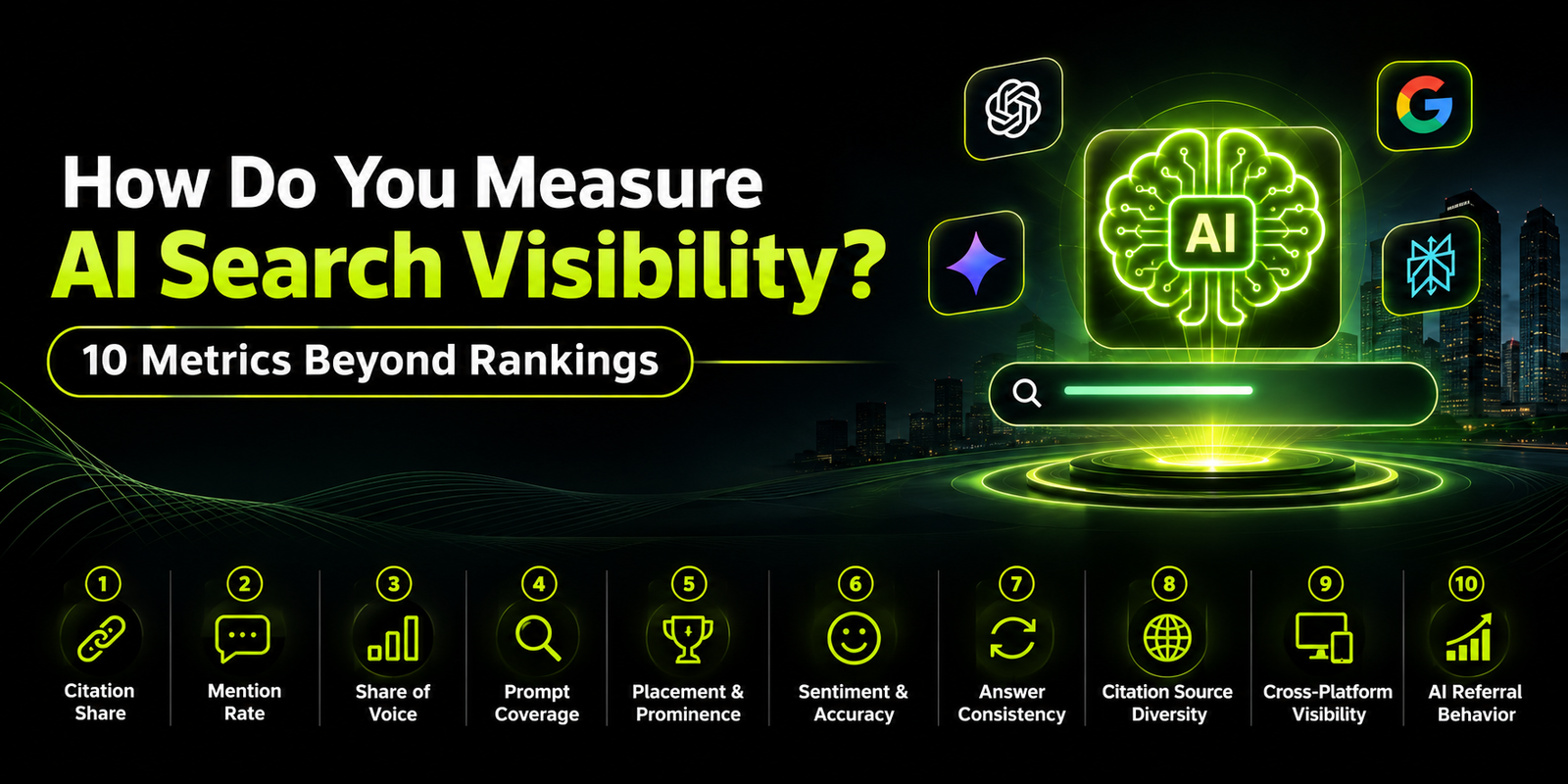
The shift from the traditional link-based directory to the search space in AI means visibility is no longer just about optimising a single web page. AI models do not just look for keywords; they evaluate synthesized web-wide trust, structured technical formats, and consistent cross-platform authority. To ensure your business isn't left out of the modern buying conversation, your digital marketing framework must evolve to match how LLMs process data. By executing a dedicated AEO, GEO, and advanced local optimisation strategy, Safal Media bridges the gap between your brand's real-world expertise and its visibility across next-generation deep search AI results.