Google Ads typically delivers faster conversions because it targets users with immediate, active purchase intent.

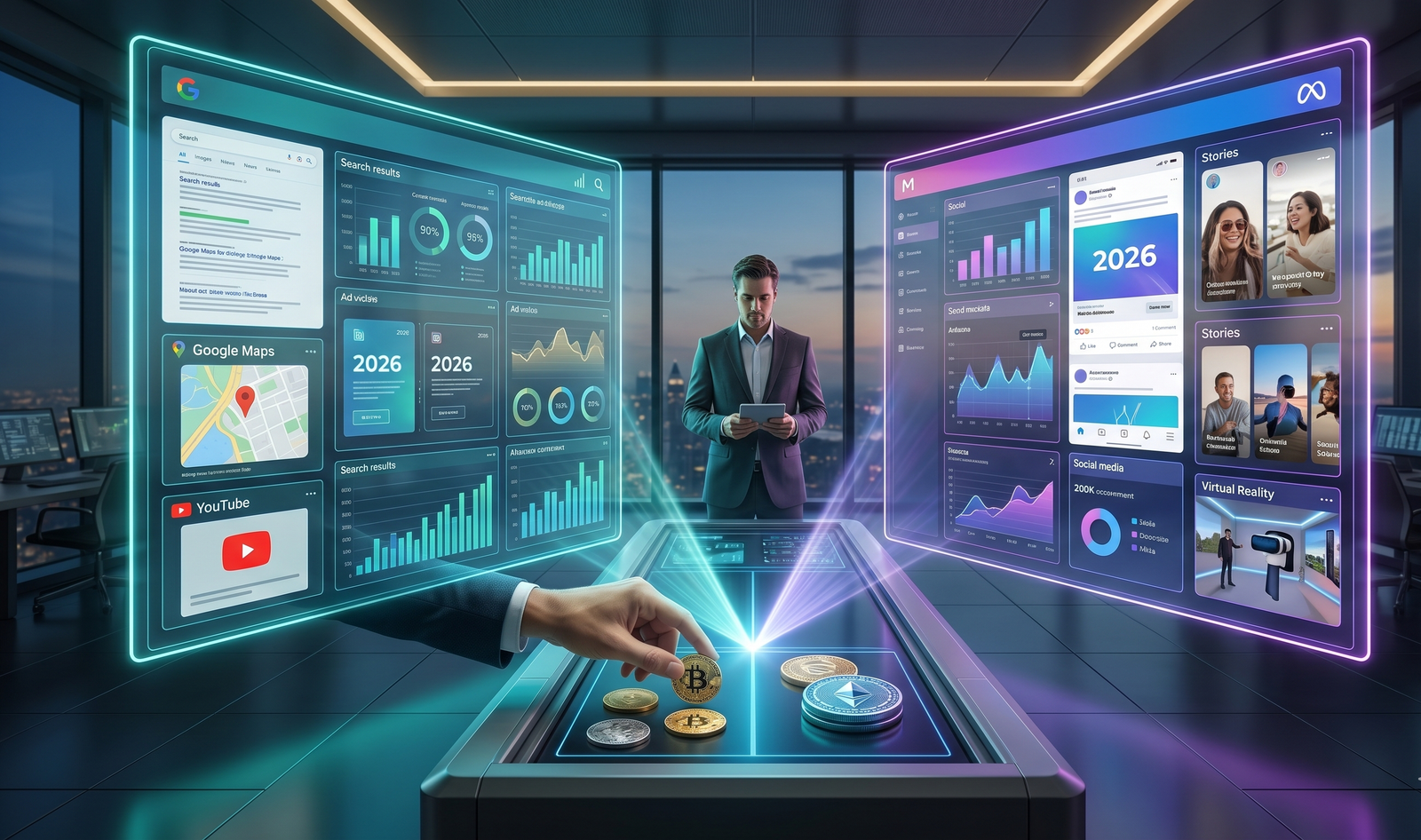
Let’s be completely honest for a second: digital advertising right now feels like a completely different beast than it did even two years ago.
We’ve officially hit 2026. Third-party cookies are ancient history, and standard interest-based targeting is practically dead. Instead, we are handing the keys over to heavy-duty AI automation, such as Google’s Performance Max (PMax) and Meta’s Advantage+.
If you are a business owner or a marketing director, you’re likely staring at your budget spreadsheet asking the same classic question: Do I sink my money into Google to catch people who are actively searching, or do I bet on Meta’s algorithm to stop people mid-scroll on Instagram?
At Safal Media, we talk to clients every single day who are tired of looking at "vanity metrics." High impressions and cheap clicks look pretty on a monthly report, but if they aren’t moving your bottom-line revenue, they are completely useless. You need to focus on what actually keeps the lights on: Cost Per Acquisition (CPA) and cash-in-hand Return on Ad Spend (ROAS).
Let’s strip away the marketing jargon and look at how these platforms actually perform today, so you can stop burning cash.
Think of Google Ads as the digital version of a storefront in a busy market. When someone types a query into that search bar, they aren’t browsing; they have a specific problem, and they want it solved right now.
With the rise of Gemini-driven search experiences, the way people search has changed. Nobody just types "best CRM" anymore. They type long, hyper-specific sentences like, "What is the best real estate CRM for a team of five that integrates with WhatsApp?" Google’s AI has gotten incredibly good at understanding this intent.
Because these buyers are so hot, they are expensive. The Cost-Per-Click (CPC) in competitive industries is sky-high. If your campaigns aren't set up perfectly, Google’s automated broad-match settings can accidentally spend your entire weekly budget on useless clicks before you’ve even had your morning coffee.
If Google is waiting for people to walk through your door, Meta Ads (Facebook and Instagram) is like a hyper-intuitive personal shopper. It interrupts someone’s day to show them a product they didn't even know existed, but instantly want.
Meta’s AI engine is incredibly smart now. The days of spending hours hacking together complex audience targeting frameworks based on demographics are gone. Meta’s Advantage+ system handles almost all of it.
Today, your creative ad asset is your targeting. Meta’s AI literally "reads" your video hooks, the text on your images, and the audio tracks to figure out exactly which users will respond to it.
Ad fatigue is brutal right now. Because the algorithm relies entirely on visuals, users get tired of seeing the same ad incredibly fast. If you aren’t constantly pumping out fresh video variations, your performance will fall off a cliff within a couple of weeks.
Before you allocate a single rupee, look at how the core mechanics of these platforms differ side-by-side:
|
What Matters |
Google Ads |
Meta Ads |
|
Why People are There |
To Solve a Problem: They are actively hunting for a business, tool, or service. |
To Be Entertained: They are relaxing; your ad has to disrupt their pattern. |
|
What the Ad Looks Like |
Mostly text search results, Google Shopping feeds, or Local Map listings. |
High-energy short-form video (Reels), carousel images, or interactive catalogues. |
|
The Cost Dynamic |
Higher cost per individual click, but usually a much shorter path to an actual sale. |
Cheaper upfront views and clicks, but you need a higher volume of traffic to find buyers. |
|
What Makes it Work |
Bulletproof landing pages and airtight, relevant ad copy. |
High-velocity video production, strong hooks, and brilliant visual storytelling. |
There is no one-size-fits-all answer here. It depends entirely on your industry and your business margins:
Don’t pick one over the other. Put 60% of your budget into Meta Advantage+ to drive mass awareness, show off your products, and find new customers. Take the other 40% and put it into Google Shopping and PMax. Why? Because when people see your ad on Instagram, a huge percentage of them will close the app, go to Google, and search for your brand or product to read reviews. You need to be there to catch them.
Make Google Search your absolute anchor (75% of your budget). Don’t waste money showing enterprise software to casual social media scrollers. Instead, use Meta Ads for the remaining 25% purely as a retargeting engine. Use it to showcase case studies, video testimonials, and free guides to people who have already visited your website through Google but haven't signed up yet.
Go for a clean 50/50 split. Use Google Search and Local SEO so you are the first name that pops up when someone searches for your service "near me." At the same time, use Meta Ads with strict geographic targeting to run highly engaging video walk-throughs of your property or facility to build massive local trust.
Thinking of Google and Meta as rivals is a massive strategic mistake. They work best when they talk to each other.
The smartest businesses run a unified funnel:
When you connect these two data loops together, both AI engines learn faster, your overall cost per acquisition drops, and your marketing becomes predictable.
At the end of the day, throwing money at an ad account based on a "hunch" or an outdated 2023 tutorial is just an expensive way to fail. The platforms are too smart, and the competition is too fierce for guesswork.
As a performance-focused digital marketing agency in Gurgaon, Safal Media helps brands build tailored, data-backed ad strategies that actually convert attention into revenue. We don't care about vanity metrics; we care about your growth.
Ready to see where your ad spend is actually going? Book a Free Paid Media Strategy Consultation with Safal Media today. No fluff, no aggressive sales pitches, just a straight-up look at your data and a blueprint of what will work for your business.