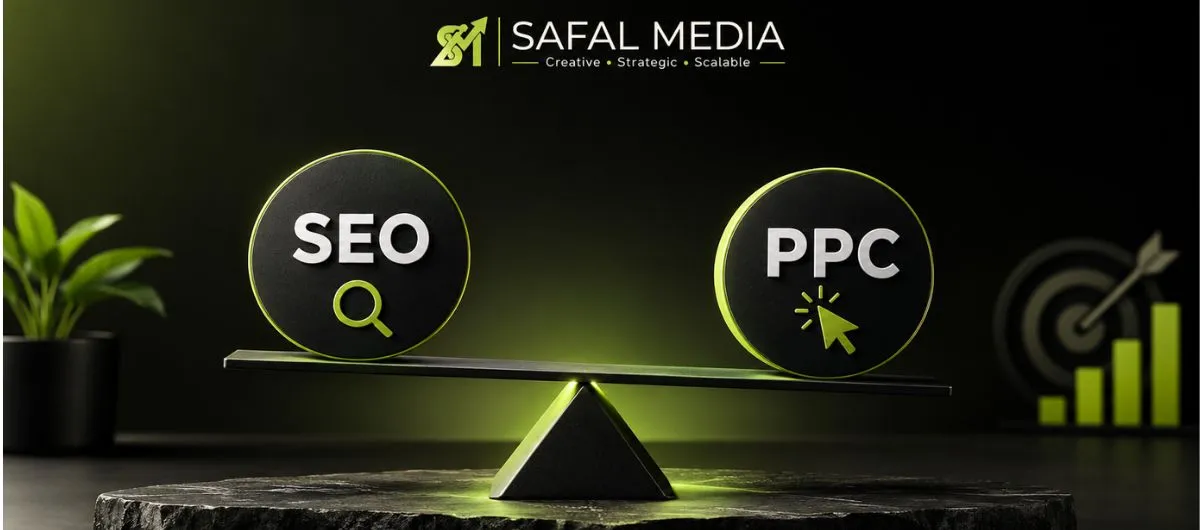
How to Choose the Right Marketing Channels for Your Business (2026 Guide)

How to Choose the Right Marketing Channels for Your Business (2026 Guide)
12 Oct

The right marketing channel is the one where your specific audience already spends their time, matches your budget's expected timeline for return, and fits your team's capacity to create content consistently. There is no universal "best" channel — SEO, PPC, social media, and email all serve different stages of the buyer journey, and picking one without mapping it to your business first is the single biggest reason marketing budgets get wasted.

This guide breaks down exactly how to make that decision, channel by channel, without the guesswork.

What Are Marketing Channels?

A marketing channel is any platform or method a business uses to reach and communicate with its audience, from organic search (SEO) to paid ads to social media and beyond. Most businesses draw from six broad categories:

  • Organic Search (SEO) — ranking in Google and AI-generated search results over time
  • Paid Search & Social Ads (PPC) — buying visibility through Google Ads, Meta Ads, etc.
  • Social Media Marketing — building presence and engagement on platforms like Instagram, LinkedIn, and Facebook
  • Email & Retention Marketing — nurturing existing leads and customers directly
  • Content & AI Search (GEO) — creating content built to be cited by AI tools like ChatGPT, Gemini, and Perplexity
  • Local & Offline Channels — Google Business Profile, local listings, print, and in-person events

No business needs all six. The goal is identifying which two or three will actually move revenue.

Why Choosing the Right Channel Matters

Picking the wrong channel doesn't just underperform; it actively drains budget that could have compounded elsewhere. A B2B service business pouring money into Instagram ads while ignoring local SEO, or a D2C brand investing in a six-month SEO strategy when it needs sales this quarter, are both common and avoidable mistakes.

At Safal Media, we've moved away from one-size-fits-all packages for exactly this reason. Every recommendation starts with a simple question: where does this specific audience already look for answers, and what can this specific business realistically sustain? The channel mix that works for a Gurgaon-based real estate brokerage looks nothing like the one that works for a national D2C skincare label — and treating them the same is where most marketing budgets go to die.

A Step-by-Step Framework for Choosing Your Marketing Channels

Use this five-step process before committing budget to any channel.

  1. Define your audience and where they actually spend time. Look at age, profession, and platform behaviour — a 45-year-old B2B decision-maker researches very differently than a 22-year-old D2C shopper scrolling Instagram Reels.
  2. Match the channel to the buyer journey stage you're targeting. Awareness-stage audiences respond to social and content; decision-stage audiences respond to search ads and retargeting.
  3. Assess your budget against realistic timelines. Paid channels (PPC, paid social) can generate leads within days. Organic channels (SEO, GEO, content) typically take 3–6 months to compound but deliver lower cost-per-lead long term.
  4. Evaluate your internal content and creative capacity. A channel you can't sustain consistently — say, daily Reels with no in-house video resource — will underperform regardless of strategy.
  5. Pilot small, measure, then scale. Run a limited budget test on your top two candidate channels for 4–6 weeks before committing to a full strategy. Track cost-per-lead, not just traffic or impressions.

Channel-by-Channel Comparison

Channel

Best For

Typical Time to Results

SEO & GEO

Long-term organic authority and visibility in both Google and AI search results

3–6+ months

PPC / Google Ads

Immediate, high-intent leads for time-sensitive offers

Days to weeks

Social Media Marketing

Brand awareness, community building, top-of-funnel demand

1–3 months

Branding & Content

Differentiation and trust-building across every other channel

Ongoing

Local SEO

Businesses serving a specific city or region, like Gurgaon and Delhi-NCR

2–4 months

Most businesses see the strongest results from combining one paid channel (for immediate pipeline) with one organic channel (for compounding, lower-cost growth) rather than spreading thin across all five.

Common Mistakes Businesses Make When Choosing Channels

  • Chasing trends instead of audience fit. Being on a platform because competitors are, not because your customers are there.
  • Spreading budget too thin. Running small tests across five channels instead of meaningful budget on two.
  • Ignoring AI search as a channel. In 2026, a growing share of research happens through AI assistants, not traditional search bars; a channel strategy that ignores GEO is already incomplete.
  • Not defining success metrics before launch. Judging a channel on vanity metrics like impressions instead of cost-per-lead or conversion rate.

How Safal Media Helps You Choose the Right Mix

Rather than starting with a fixed package, our process begins with Strategic Discovery, understanding your industry, audience behaviour, and business goals before recommending a single channel. From there, we build a custom roadmap using the channels that actually fit: whether that's hyper- local SEO for a Gurgaon business, high-intent search ads for a fast sales cycle, or AI-search optimisation to make sure your brand gets cited when your customers ask ChatGPT or Gemini for recommendations. Explore our full range of digital marketing services to see how each channel fits into a complete strategy.

The Bottom Line

Choosing the right marketing channel isn't about picking what's trending, it's about matching your audience's behaviour, your budget's timeline, and your team's capacity to a small, focused set of channels you can actually sustain. Start with one paid and one organic channel, measure relentlessly, and expand only once you know what's working.

Not sure which channels fit your business? Get a free strategy consultation with Safal Media and we'll map out a channel mix built around your goals, not a generic package.

Frequently Asked Questions

  • 01. What marketing channel is best for a small business with a limited budget?
    Local SEO and organic social media typically offer the best return for small businesses, since they require lower upfront spend than paid ads and build compounding visibility over time.

  • 02. How many marketing channels should a business use at once?
    Most businesses get the best results focusing on two to three channels at a time — one paid, for near-term leads, and one or two organic, for long-term compounding growth — rather than spreading budget across five or more.
  • 03. Is SEO still worth it with AI search tools like ChatGPT and Gemini?
    Yes, and arguably more so. SEO has expanded into Generative Engine Optimization (GEO), where the goal is getting your brand cited directly inside AI-generated answers, not just ranking on a results page.
  • 04. How long does it take to see results from a new marketing channel?
    Paid channels like Google Ads can generate leads within days. Organic channels like SEO typically take 3 to 6 months to show measurable, compounding results.
  • 05. Should local businesses in Gurgaon or Delhi-NCR prioritise local SEO?
    Yes. For businesses serving a specific geography, local SEO — including Google Business Profile optimisation and location-specific content — usually delivers faster, lower-cost leads than broader national campaigns.

Share This:

halfRobot
Chat on WhatsApp
Call Now
Get Free Quote